The most common discovery call mistakes are asking leading questions, pitching your idea, talking too much, accepting general answers, and asking about the future instead of the past. None of them mean you're bad at this. They are habits almost everyone falls into, and every one has a simple fix.
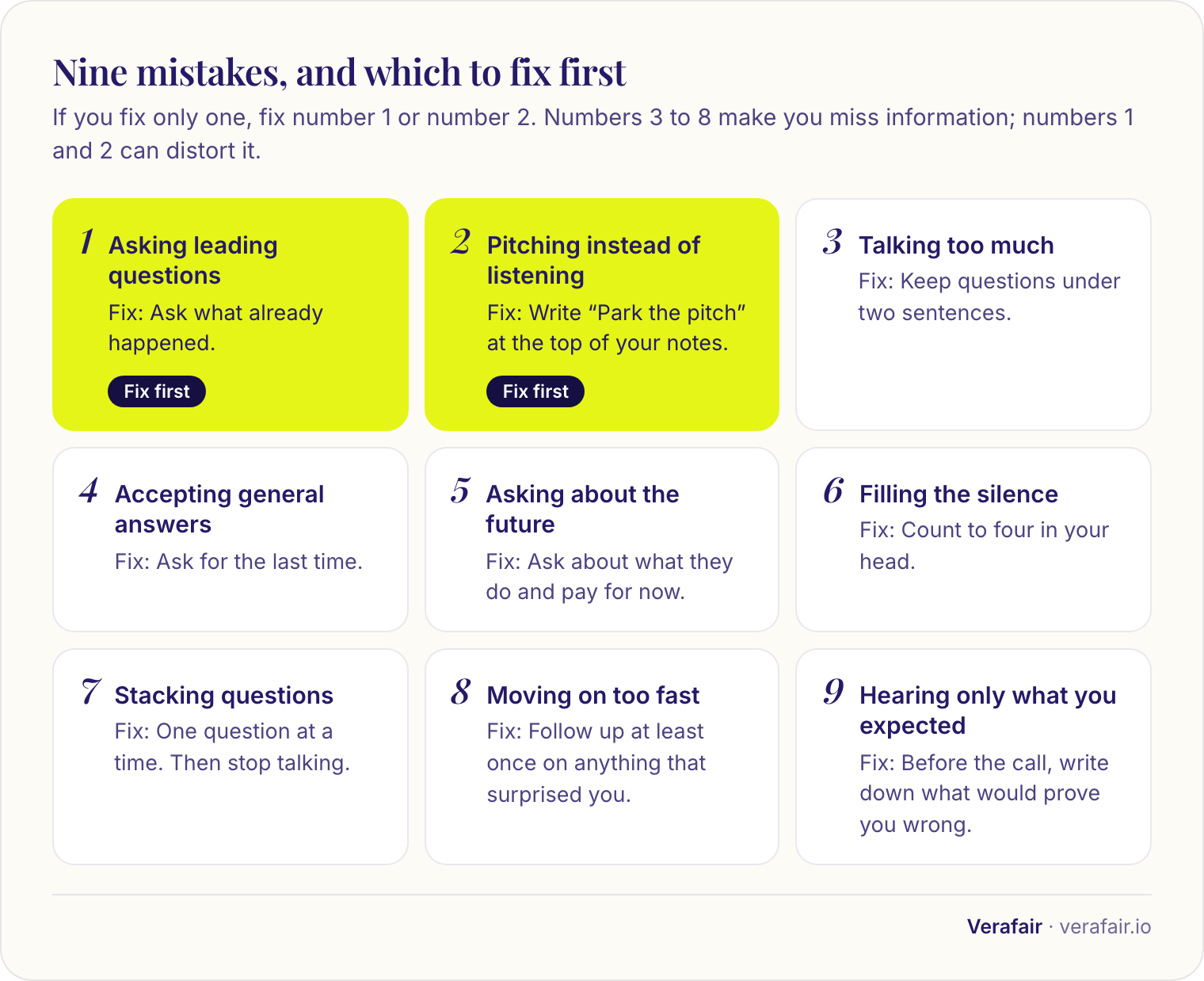
Below are nine, each with what it sounds like, why it hurts, and what to do instead.
1. Asking leading questions
What it sounds like: "Wouldn't it be helpful if this were automatic?" Why it hurts: The person answers your hint instead of their own experience. Fix: Ask what already happened. "How do you handle it today?" (15 examples)
2. Pitching instead of listening
What it sounds like: "Oh, we're building exactly that! It does X, Y, and Z..." Why it hurts: The moment you pitch, the conversation becomes about your idea, and they stop telling you their story. Fix: Write "Park the pitch" at the top of your notes. If you feel the urge, say "That's helpful, tell me more about how you do that today."
3. Talking too much
What it sounds like: Long questions, explanations, and stories of your own. Why it hurts: Every minute you talk is a minute you're not learning. Fix: Keep questions under two sentences. Aim to listen most of the time.
4. Accepting general answers
What it sounds like: "I usually check it every morning." → "Great, next question." Why it hurts: "Usually" and "always" are summaries, not evidence. They hide the real detail. Fix: Ask for the last time. "Can you tell me about this morning? What did you actually do?"
5. Asking about the future
What it sounds like: "Would you pay for this?" "How often would you use it?" Why it hurts: People are kind and optimistic, and poor at predicting their own behavior. Fix: Ask about what they do and pay for now. "What do you use today, and what does it cost you?"
6. Filling the silence
What it sounds like: The person pauses, and you jump in with a new question or a suggested answer. Why it hurts: The most useful part of an answer often comes after the pause. Fix: Count to four in your head. If it stays quiet, try "What else?" or just nod.
7. Stacking questions
What it sounds like: "How do you find clients, and what do you do with them, and is that easy?" Why it hurts: They answer the easiest part and skip the rest, and you can't tell which part they answered. Fix: One question at a time. Then stop talking.
8. Moving on too fast
What it sounds like: You ask five questions in a row and follow up on none. Why it hurts: You collect shallow answers to everything and deep answers to nothing. Fix: Follow up at least once on anything that surprised you. (Follow-up cheat sheet)
9. Hearing only what you expected
What it sounds like: After the call: "They loved it!" (They said one nice thing, out of forty things.) Why it hurts: You remember what confirms your idea and drop the rest. This is confirmation bias, and it's well documented in UX research specifically, not just a personal failing (NN/g, "Confirmation Bias in UX"). Fix: Before the call, write down what would prove you wrong. After it, check the transcript for exactly that.
Which one to fix first
If you fix only one, fix number 1 or number 2. Leading questions and pitching change what people tell you, so they reduce the quality of everything else. Numbers 3 to 8 make you miss information; numbers 1 and 2 can distort it.
A simple habit that helps
After each call, write down:
- One question you're glad you asked
- One you wish you could redo, and how you'd rephrase it
Two lines. Two minutes. It adds up.
Check your own calls
The hard part is spotting your own habits, because they feel natural. Paste your transcript into Verafair and it will point to the exact lines, explain why each one matters in plain language, and suggest how to rephrase.
Frequently asked questions
What is the biggest mistake in customer discovery? Pitching your idea or asking leading questions. Both change what people tell you, so they affect every other answer.
Why do people say nice things that turn out not to be true? Most people want to be kind and helpful, so they agree with what you seem to want. Asking about past behavior, not opinions, avoids this.
Is it bad to talk about my product during a call? Not at the end, once you've heard their story. It becomes a problem when you start there, or pitch while they're still describing their situation.
How do I stop talking so much? Write shorter questions, count to four before you reply, and use "Tell me more" instead of explaining.
How do I know if I made these mistakes? Read or run a transcript of the call. You'll see them clearly on the page, even if they were invisible in the moment.