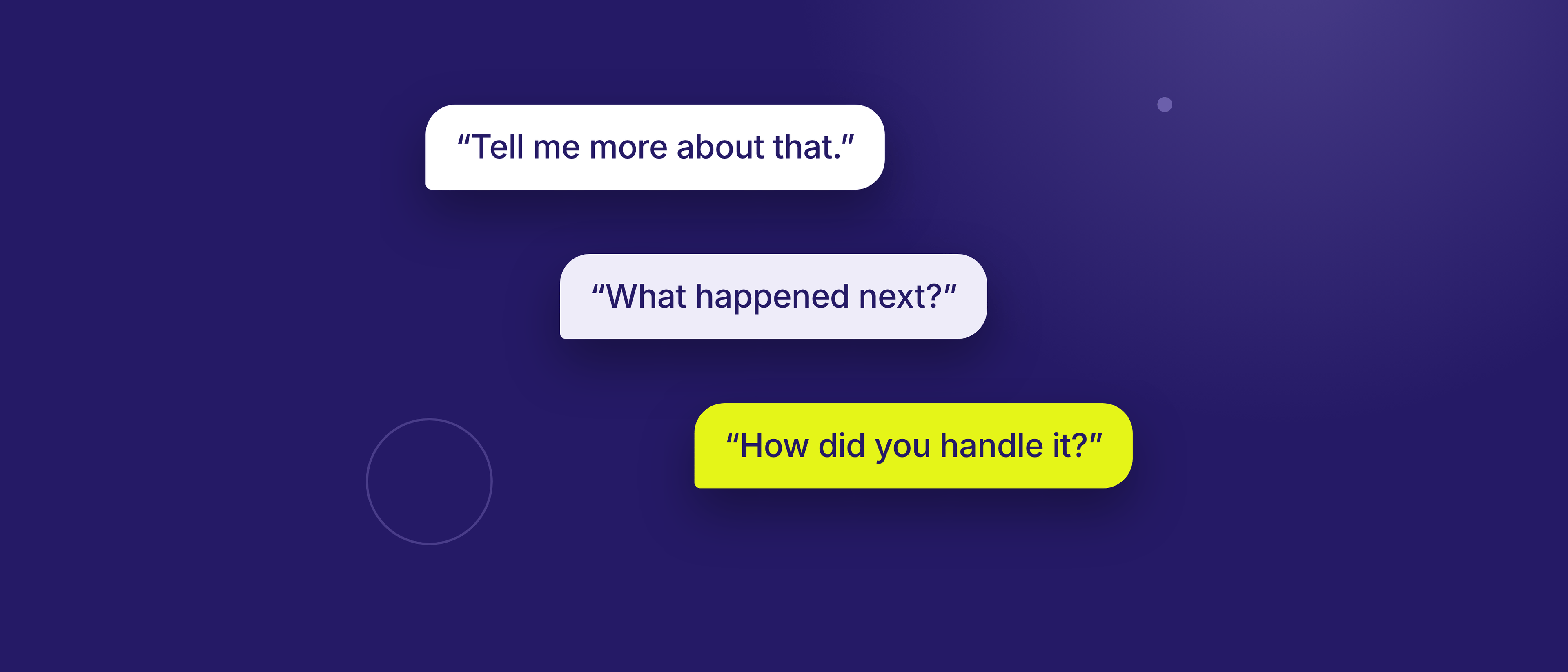
The best follow-up questions are short, neutral, and curious. They don't contain your opinion or your guess, they simply invite the person to say more. "Tell me more about that," "What happened next?" and "Can you give me an example?" work in almost any conversation.
Most of what you learn in an interview comes from the follow-ups, not from your prepared questions. Here are 20 you can use straight away, grouped by what's happening in the conversation.
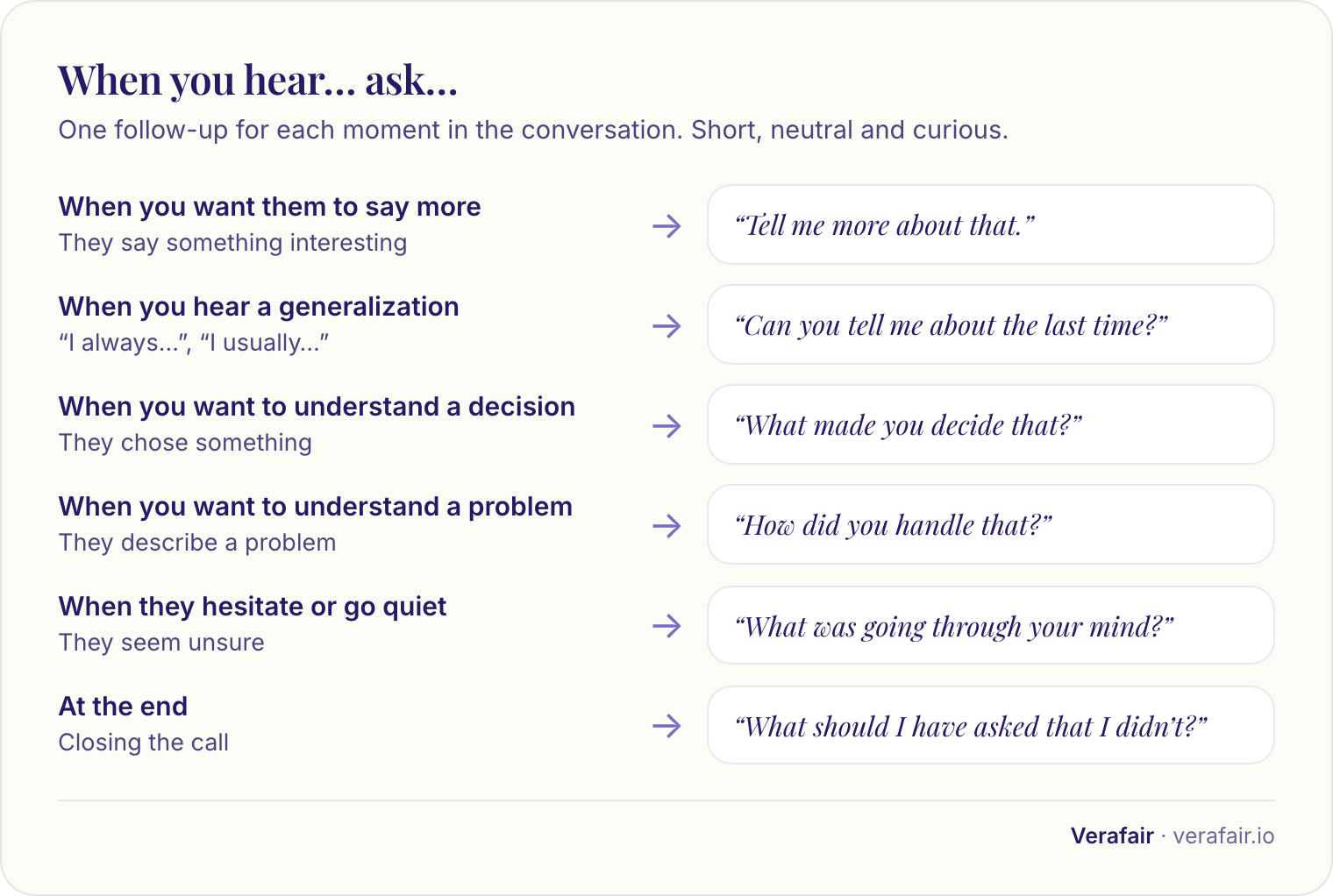
When you want them to say more
| Situation | Say | Why it works |
|---|---|---|
| They say something interesting | "Tell me more about that." | Open, neutral, works anywhere |
| The story stops early | "What happened next?" | Keeps the story moving |
| They give a short answer | "Can you say a bit more?" | Invites detail without pressure |
| They use a word you're unsure of | "What do you mean by [their word]?" | Uses their language, not yours |
| You want the full picture | "Walk me through that step by step." | Slows things down |
When you hear a generalization
| Situation | Say | Why it works |
|---|---|---|
| "I always...", "I usually..." | "Can you tell me about the last time?" | Turns a summary into a real moment |
| "It's a nightmare." | "What makes it feel that way? Can you give me an example?" | Gets the reason behind the feeling |
| "Everyone does it this way." | "How do you do it?" | Brings it back to their experience |
| "It depends." | "What does it depend on? Tell me about a time it went one way." | Turns vague into specific |
When you want to understand a decision
| Situation | Say | Why it works |
|---|---|---|
| They chose something | "What made you decide that?" | Reveals reasons and trade-offs |
| They switched or stopped | "What led to that change?" | Finds the trigger |
| They mention an alternative | "What else did you consider?" | Maps the options they saw |
| They mention someone else | "Who else was involved?" | Uncovers who really decides |
When you want to understand a problem
| Situation | Say | Why it works |
|---|---|---|
| They describe a problem | "How did you handle that?" | Reveals their workaround |
| They mention a workaround | "Show me, or tell me how that works." | Workarounds reveal real needs |
| They mention a past attempt | "What did you try before?" | Shows what has failed |
| They describe the impact | "What happened as a result?" | Reveals the real cost |
When they hesitate or go quiet
| Situation | Say | Why it works |
|---|---|---|
| They pause mid-thought | (Wait. Count to four.) | The best details often follow a pause |
| They seem unsure | "What was going through your mind?" | Invites the thought behind the pause |
| They seem to hold back | "There's no right answer. I'm curious what you really think." | Gives permission to be honest |
At the end
| Situation | Say | Why it works |
|---|---|---|
| Closing the call | "What should I have asked that I didn't?" | Catches what you missed |
Three techniques worth learning
1. Echo. Repeat their last few words as a question. If they say "It just felt clunky," you say "Clunky?" People then explain, in their own words.
2. The summary check. Say back what you heard, then ask what you got wrong: "So it sounds like the biggest delay is waiting for approval. What have I missed?" Ending with "what have I missed?" matters. It invites correction instead of agreement.
3. The silent nod. A nod and a slow "mm-hm" often gets more than a question. It tells the person you're listening and want them to go on.
Follow-ups to avoid
- "So you're saying...?" followed by your interpretation. You may be putting words in their mouth. Use the summary check above instead.
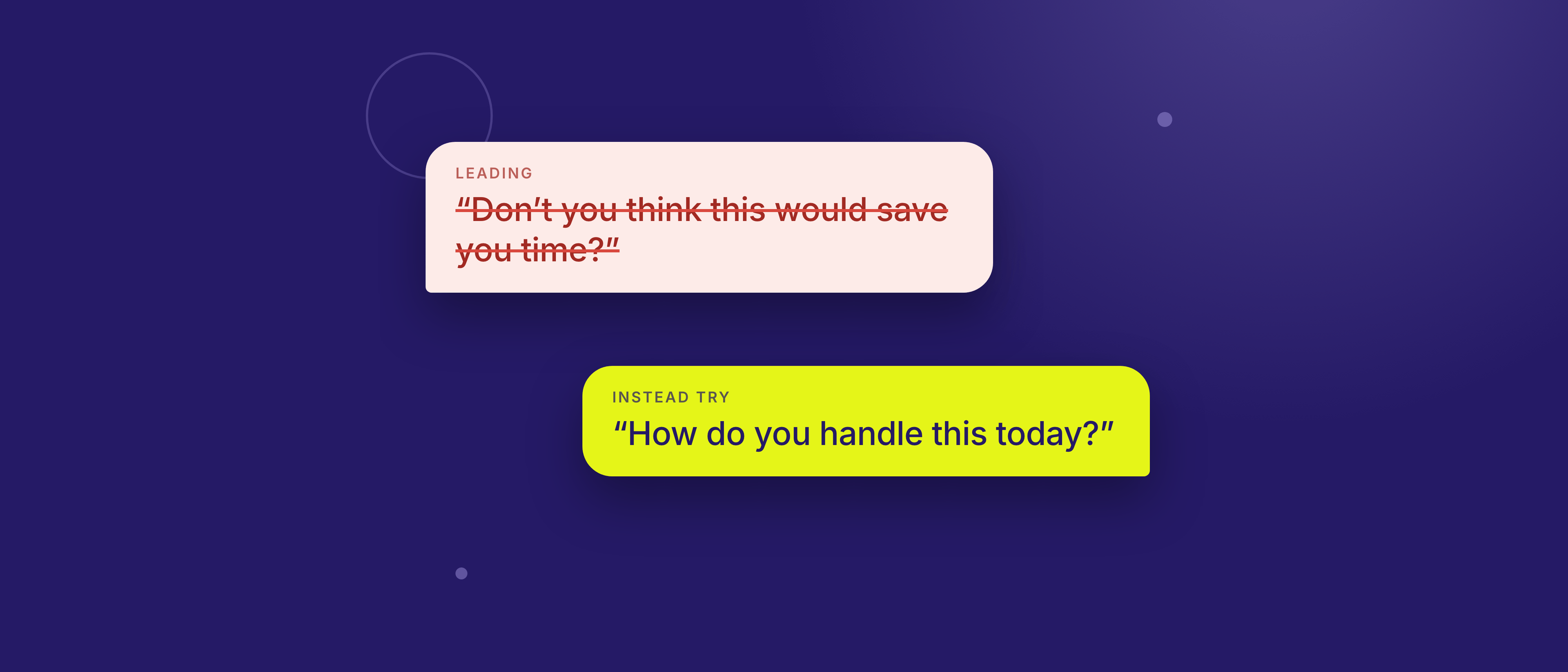
- "Don't you think...?" It's a leading question.
- "Why?" on its own can sound like a challenge. "What led to that?" is gentler.
- Two or three questions at once. They'll answer the easiest one.
One habit to build
For your next call, aim to ask one follow-up for every answer that surprises you. Surprises are where the most valuable information hides.
Check your own calls
Most of the learning in an interview happens in the follow-ups. Run your transcript through Verafair to see where you moved on too soon and where a good follow-up would have opened up the answer.
Frequently asked questions
What is a follow-up question? A follow-up question is one you ask in response to what someone just said, to understand it better, such as "Tell me more about that" or "What happened next?"
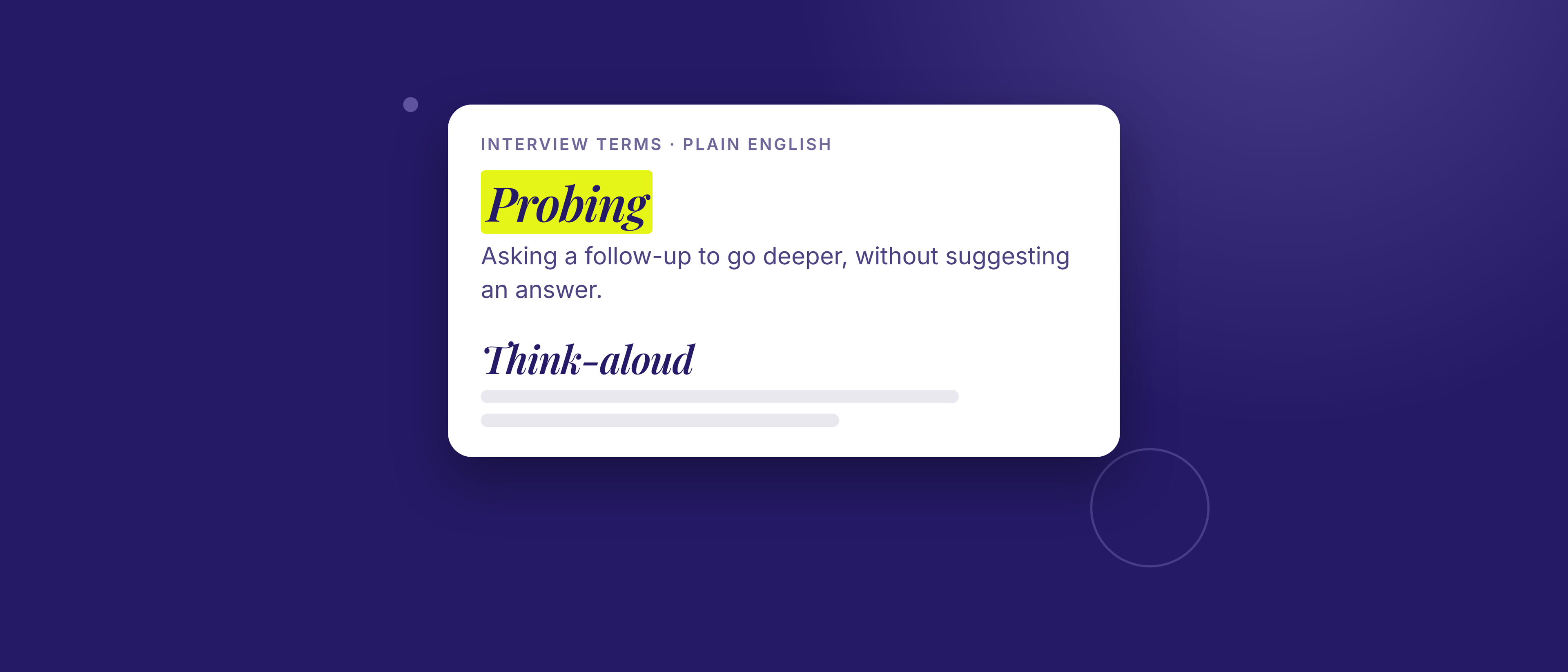
What is probing in an interview? Probing means asking follow-up questions to go deeper into an answer, instead of moving on to your next prepared question.
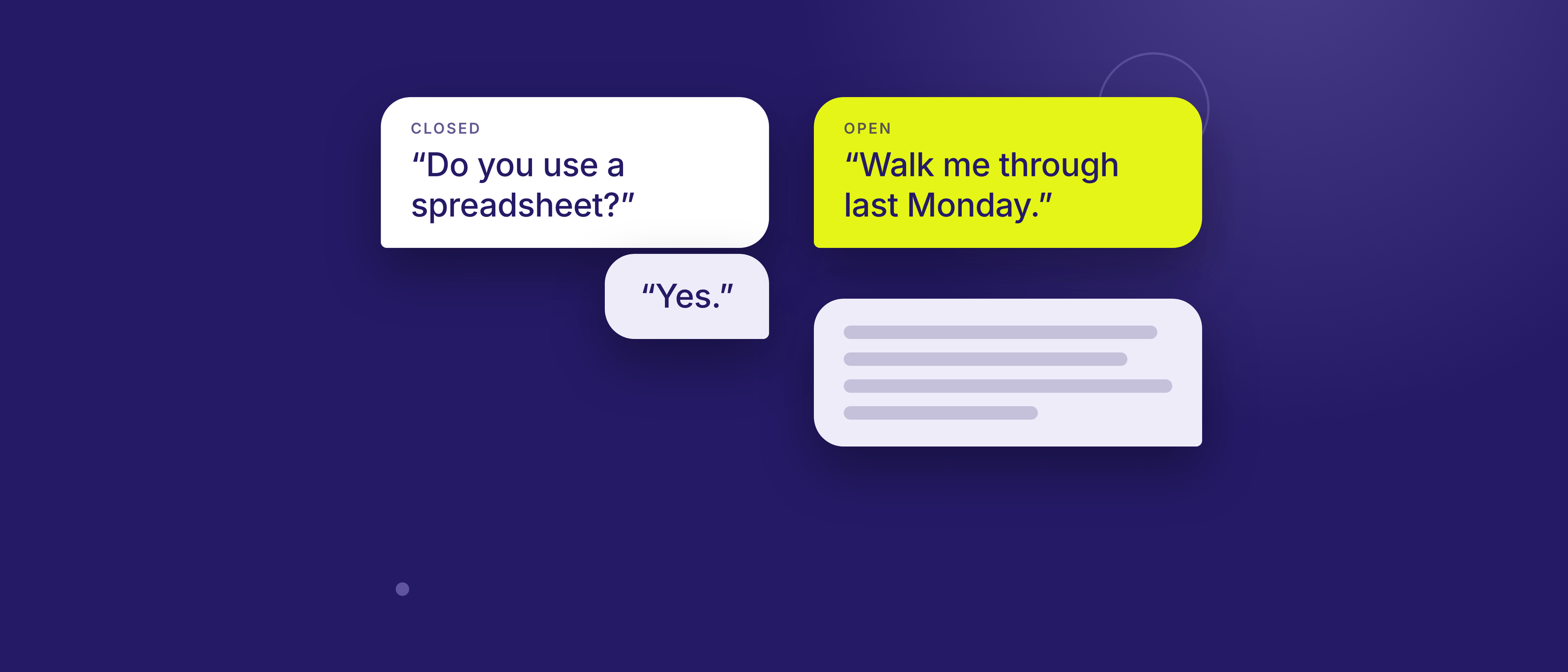
How do I ask follow-ups without leading? Keep them neutral: use their words, don't add your own opinion or guess, and avoid yes/no phrasing.
How many follow-ups should I ask? As many as you need. In a good interview, most of your questions are follow-ups.
What if I run out of things to say? Try the echo (repeat their last words as a question), or ask "What else?" Both are simple and neutral.