To get quiet participants to speak in a focus group, give everyone a way to contribute that isn't "shouting over the others": write before you talk, go round the group, invite people gently by name, and ask directly for different views. The goal isn't to make quiet people louder. It's to make sure the loudest voice doesn't become the group's opinion.
Focus groups have a built-in problem. Whoever talks first and most sets the tone, and others tend to agree or stay silent. What you hear can end up being one person's view repeated by everyone.
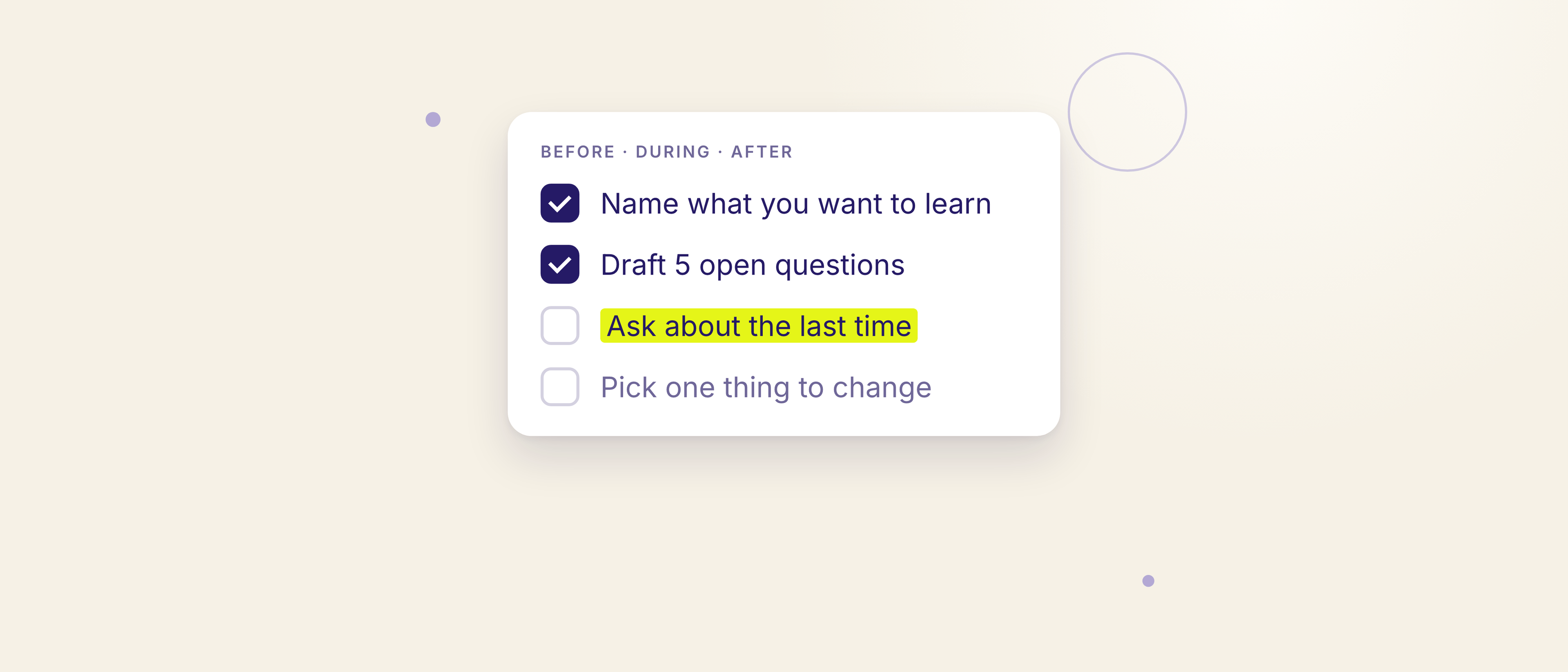
Before the session
- Keep group members on similar footing. Where you can, avoid mixing very senior and junior people, since people often defer to seniority.
- Keep it small. Around five to eight people gives everyone room.
- Plan the first question so everyone answers. A simple warm-up ("Tell us your name and the last time you...") gets every voice into the room early.
- Prepare a co-facilitator or note-taker if you can, so you can focus on people, not on writing.
- Prepare something to write on: paper, sticky notes, a shared document, or a poll.
Ground rules to say out loud
"There are no right answers. We want different views, so if you see it differently from someone else, that's really helpful. One person speaks at a time, and I'll make sure everyone gets a turn."
Saying "different views are welcome" out loud makes it much easier to disagree.
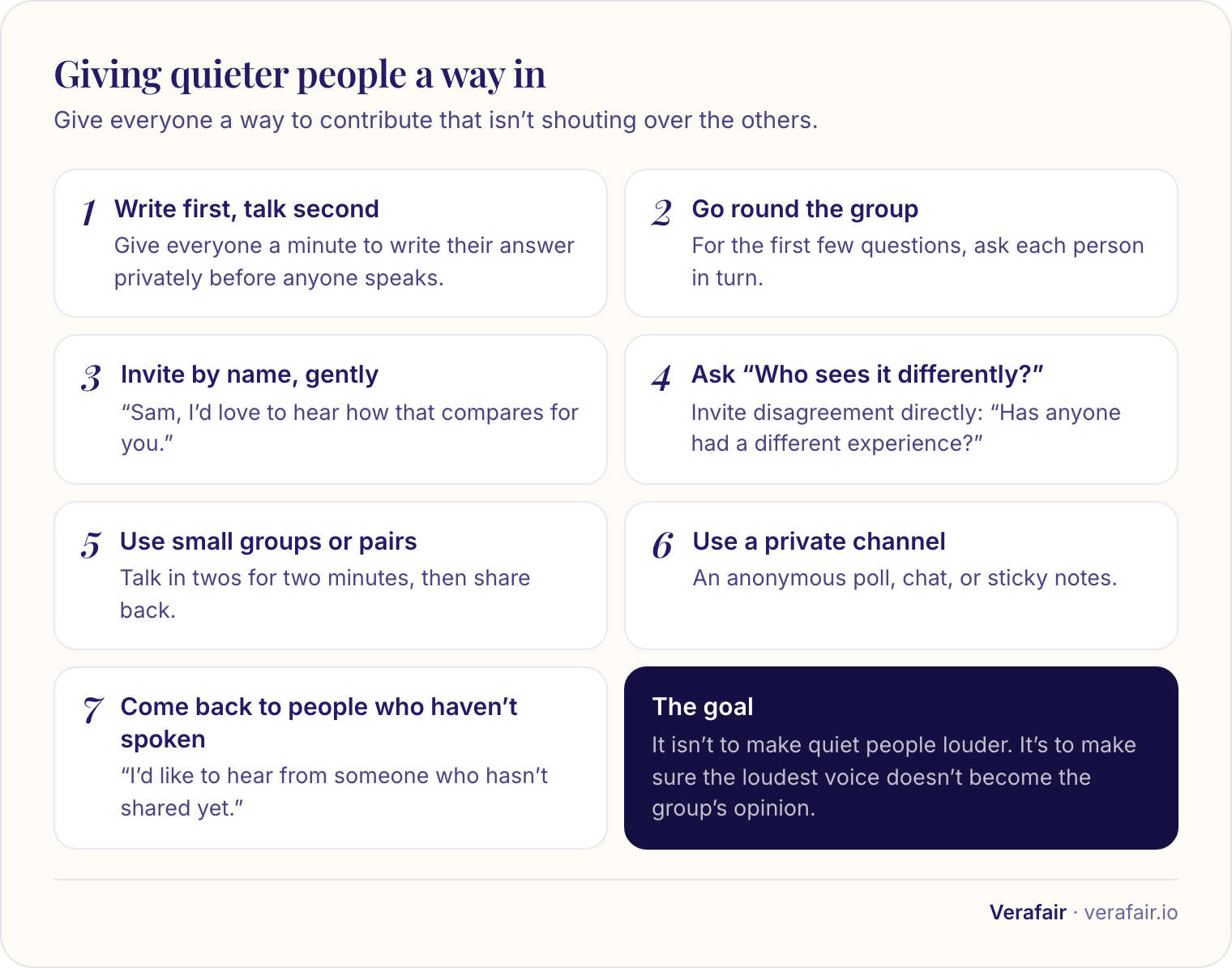
Seven ways to draw people out
1. Write first, talk second
Give everyone a minute to write their answer privately before anyone speaks. Then ask people to share. Now the quiet person has something ready, and nobody's answer was shaped by the first speaker.
2. Go round the group
For the first few questions, ask each person in turn. It becomes normal to speak, and nobody has to fight for a gap.
3. Invite by name, gently
"Sam, I'd love to hear how that compares for you." Keep the tone warm and give an easy exit: "...if you'd like to add something."
4. Ask "Who sees it differently?"
Invite disagreement directly: "Has anyone had a different experience?" It signals that disagreement is useful, not rude.
5. Use small groups or pairs
Ask people to talk in twos for two minutes, then share back. Quiet people often speak more freely to one person.
6. Use a private channel
An anonymous poll, chat, or sticky notes let people give an opinion without having to say it in front of others.
7. Come back to people who haven't spoken
"We've heard from a few of you. I'd like to hear from someone who hasn't shared yet."
When someone dominates
Don't confront them. Redirect kindly:
- "Thanks, that's really helpful. Let me hear from someone who hasn't spoken yet."
- "I want to make sure we hear everyone. Let's take a round."
- A quiet word during a break: "I love your energy. Could you help me by letting others go first on the next few?"
Don't rush to agreement
A group that agrees quickly is often a group that stopped talking. When you hear consensus, test it:
| Instead of... | Say... |
|---|---|
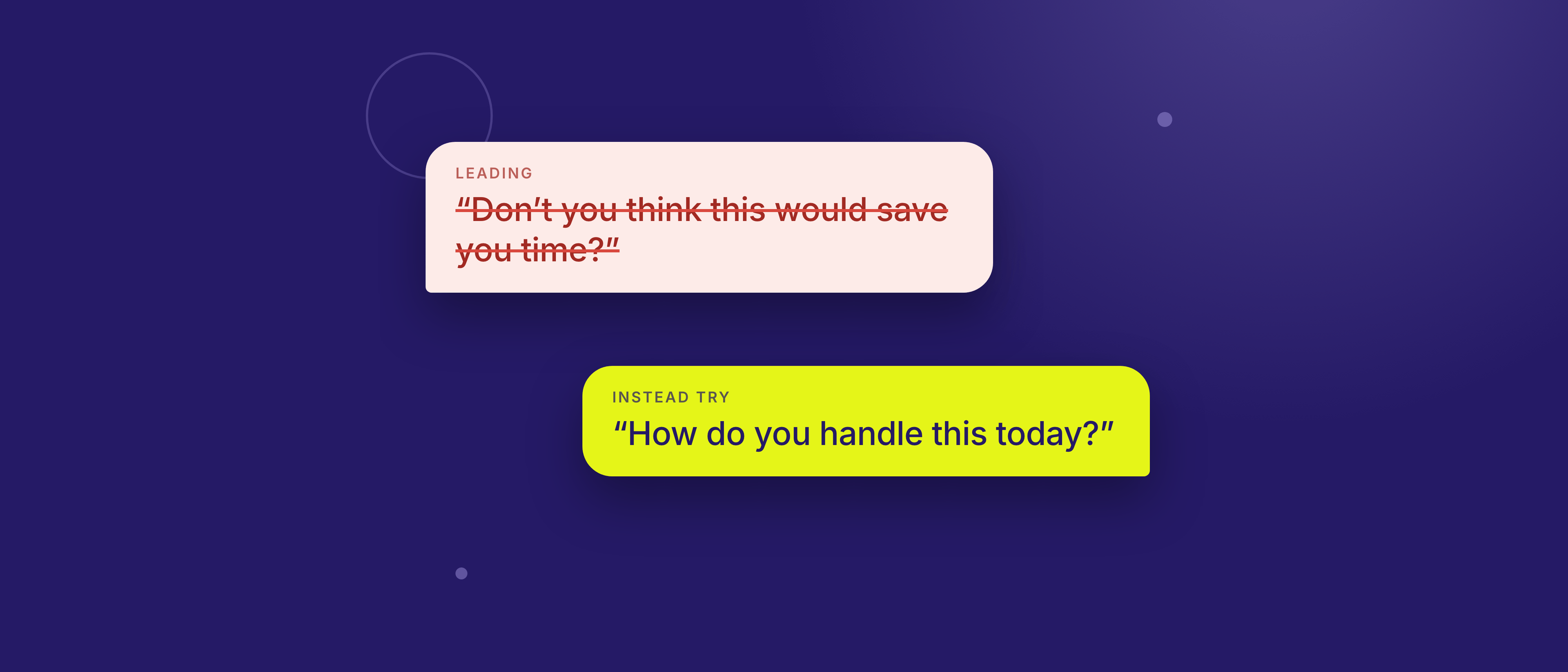
| "So everyone agrees that X." | "I've heard X from a few of you. What have I missed?" |
| "Does that sound right?" | "How does that fit with your experience?" |
| "Great, next topic." | "Is there another way to look at that?" |
Be careful how you summarize too. A neat summary can narrow the group's view. Offer it as a question, not a conclusion: "Here's what I'm hearing. Tell me what I've got wrong."
After the session
- Note who spoke least and whether you found a way to bring them in.
- Separate what one person said from what several said.
- Write down the disagreements, not just the agreements. They're often the most useful part.
Check your own calls
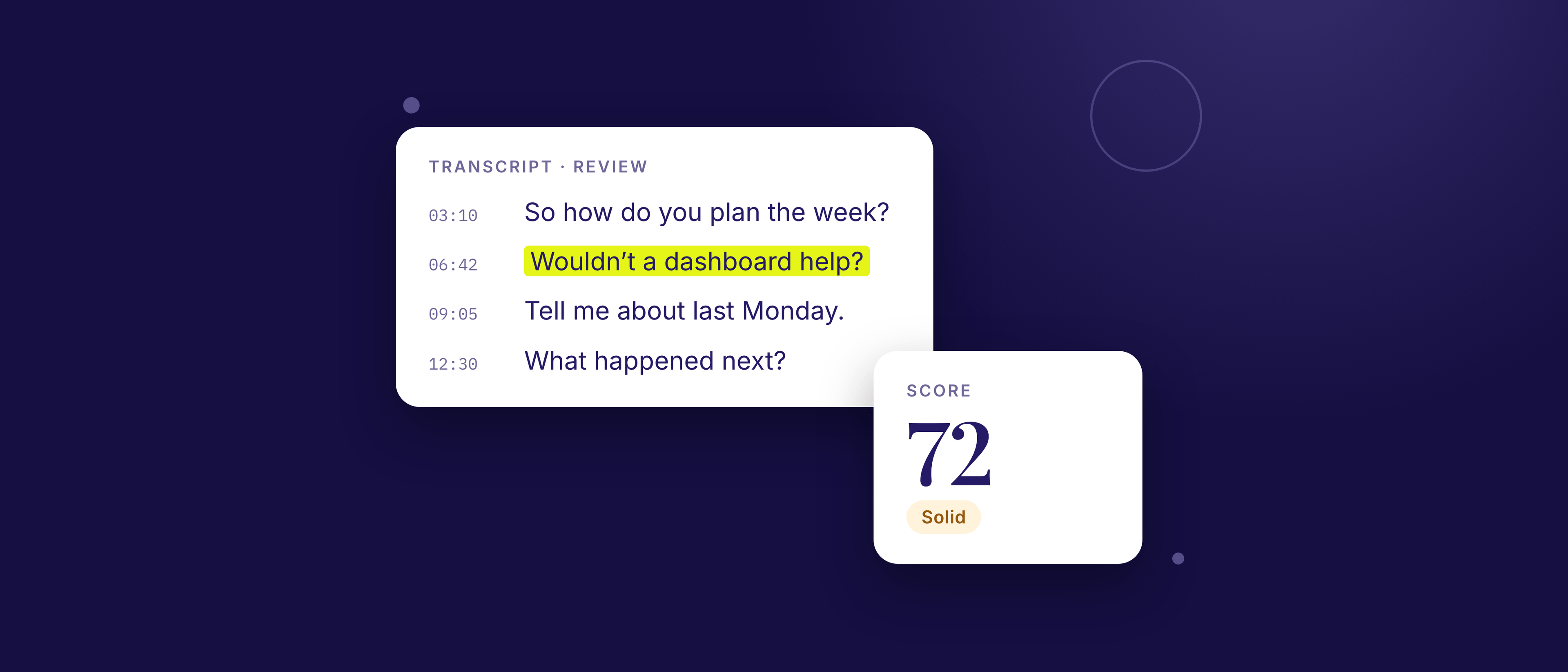
It's difficult to notice who's talking and who isn't while you're facilitating. Run your focus group transcript through Verafair and choose "Focus Group." It looks at whether you drew out quieter participants, probed disagreement, and avoided narrowing the group's view when you summarized.
Frequently asked questions
What is a focus group? A focus group is a moderated discussion with a small group of people to learn how they think and feel about a topic, product, or idea.
How many people should be in a focus group? Around five to eight is usually a good balance. Fewer feels like an interview; more makes it hard to hear everyone.
How do I stop one person from taking over? Redirect kindly by inviting someone else, use rounds so everyone answers in turn, and have people write first so early speakers don't set the tone.
Why does everyone seem to agree so quickly? People often go along with the first confident voice. Ask "Who sees it differently?" and use private writing or polls to surface other views.
Should I use an online or in-person format? Both work. Online, chat and polls are helpful quiet channels. In person, sticky notes and pairs do the same job.