A discovery call goes well or badly mostly because of what you do before it and what you don't say during it. This checklist covers all three stages: preparing, running the call, and learning from it afterwards. It's short on purpose, so you can use it every time.
Download the one-page PDF version to print or keep beside you on the call.
The one thing to remember: ask about what already happened, in their words, and then stay quiet long enough to hear the real answer.
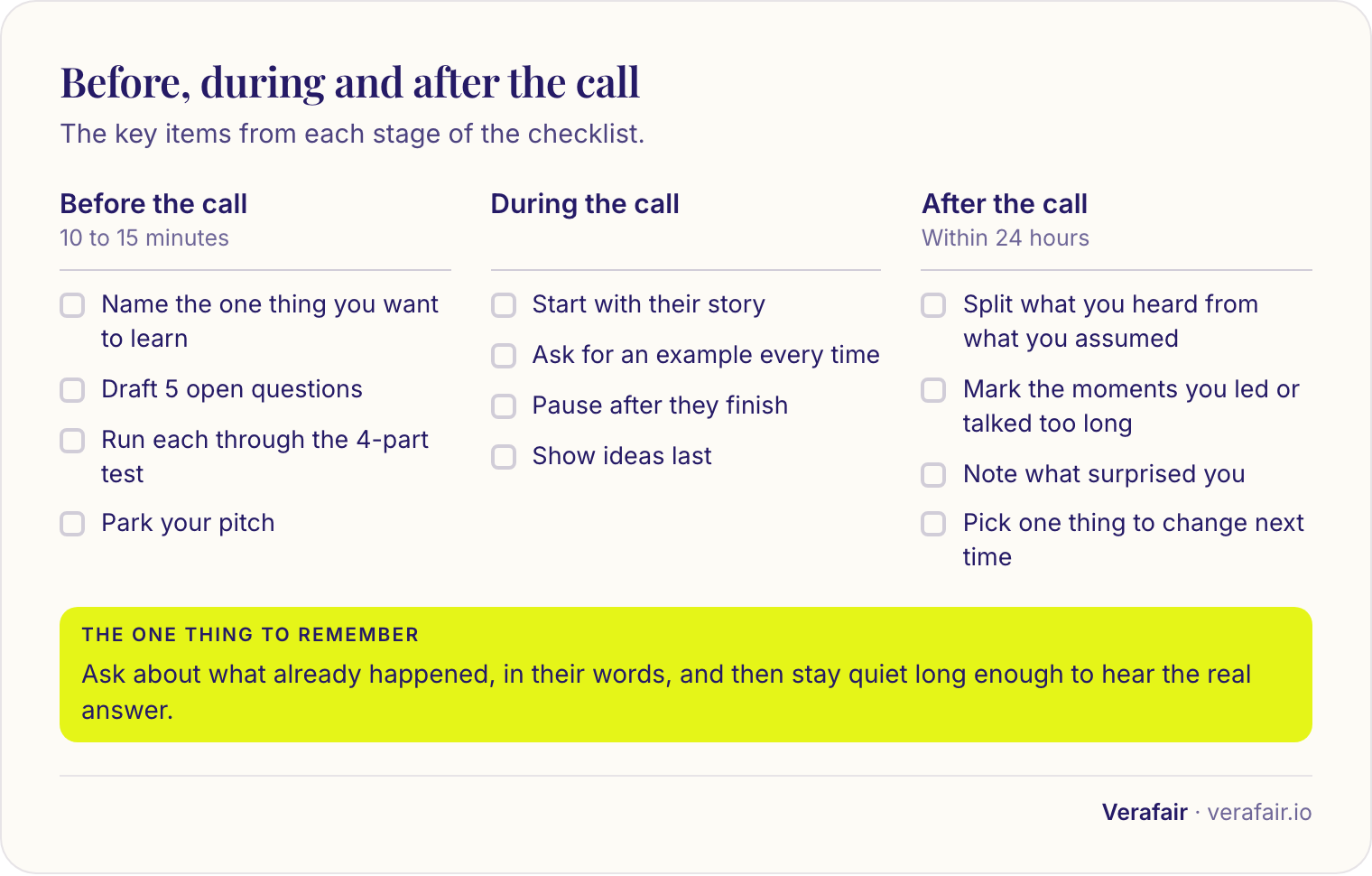
Before the call (10 to 15 minutes)
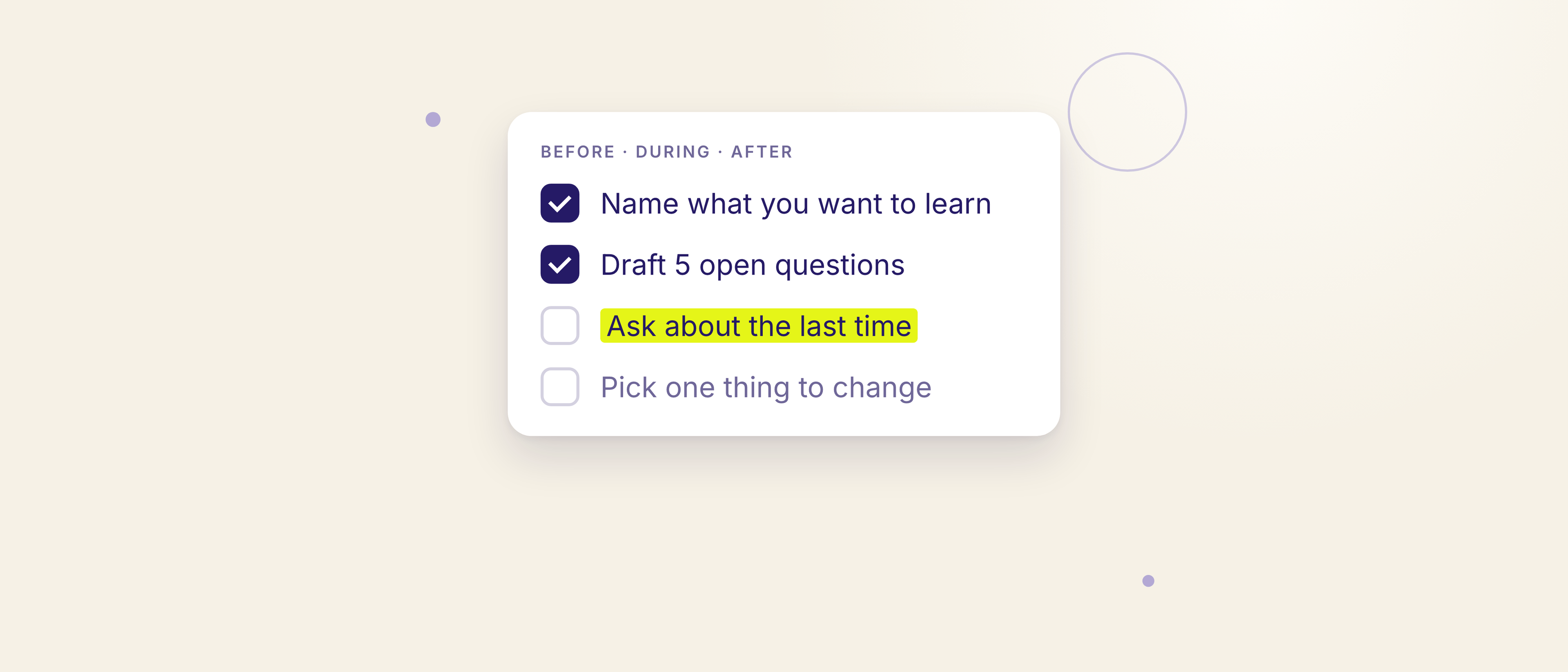
- Name the one thing you want to learn. A question about their world, not a feature you want to build.
- Write down your assumptions. What do you believe is true that you haven't actually checked? Note how you'd spot it if you were wrong.
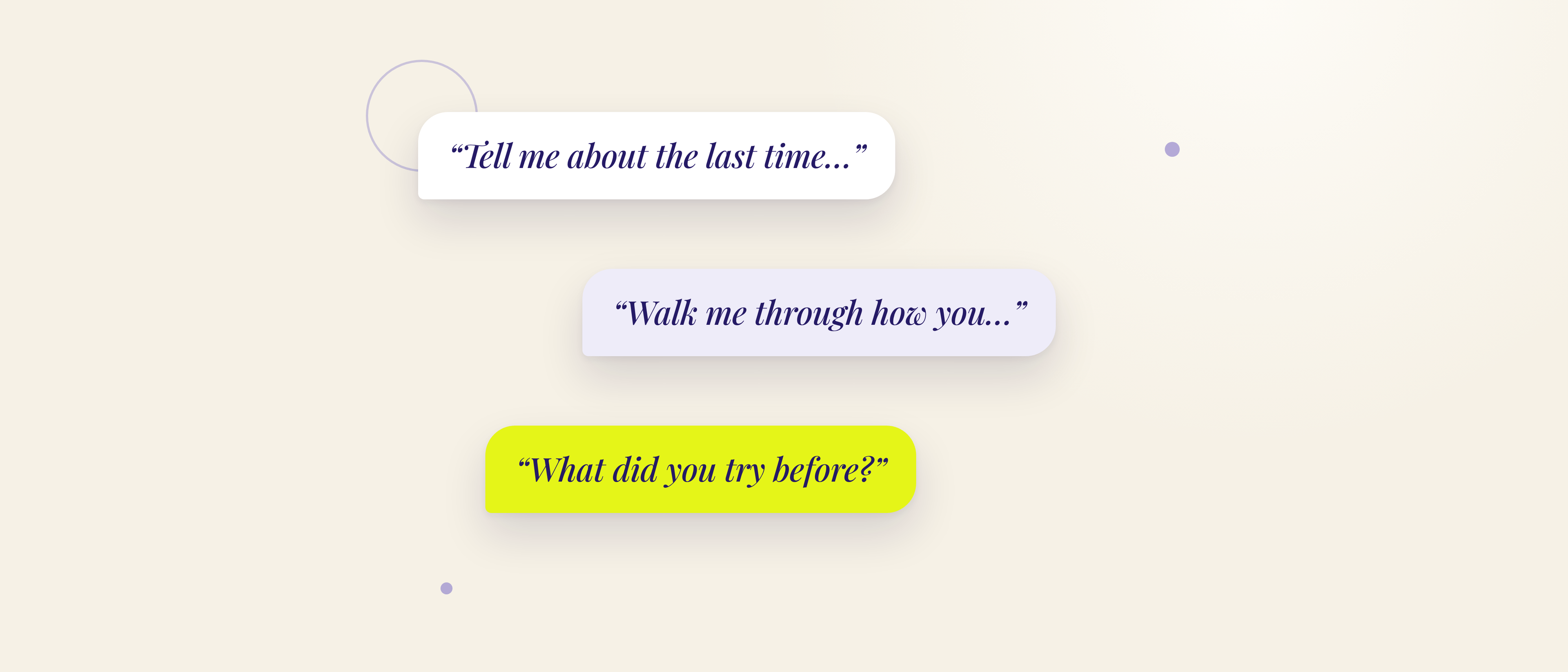
- Draft 5 open questions. Start them with "Tell me about the last time..." or "Walk me through...".
- Run each through the 4-part test. Does it contain the answer? Hint at a right answer? Allow a yes/no? Ask about the future? If yes to any, rewrite it. (See 15 examples.)
- Pick a recent moment to anchor on. Something specific they did in the last few weeks, not "in general."
- Set it up properly. Ask permission to record, check your tech, and plan 30 to 45 minutes.
- Decide your talking share. Aim to listen about four-fifths of the time.
- Park your pitch. Decide now what you will not say until the end.
Why it matters: you can't think clearly about how to phrase a question while someone is waiting for it. Writing the questions beforehand is when you catch the leading ones.
During the call
- Open warm and honest. "There are no wrong answers, and I'm not here to sell anything."
- Start with their story. Their day, their last attempt, their words. Your product comes later.
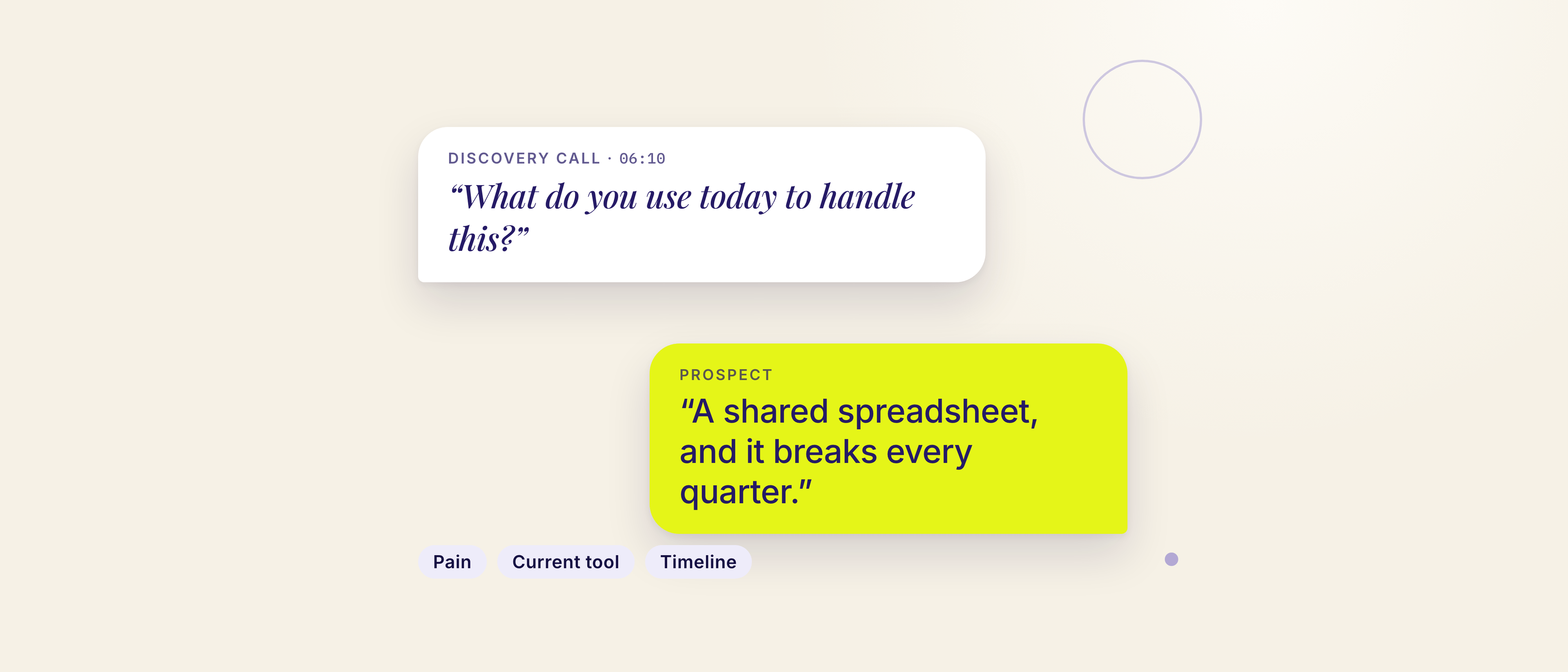
- Ask for an example every time. When you hear "always" or "usually," ask "Can you tell me about the last time?"
- Pause after they finish. Count to three or four before you speak. The useful detail often lands in the silence.
- Use neutral follow-ups. "Tell me more." "What happened next?" "How did you handle that?" (20 more here.)
- Don't fix, defend, or pitch. Write it down and keep going.
- If you led, take it back. "Let me rephrase that. I don't want to put words in your mouth."
- Show ideas last. Get their first, unexplained reaction before you say what you meant.
- Finish with a wide-open question. "What should I have asked you that I didn't?"
Why it matters: the first ten minutes set the tone. If you begin with a story instead of a pitch, people keep telling stories.
After the call (within 24 hours)
- Save the recording or transcript. Remove names and sensitive details before you share or paste it anywhere.
- Split what you heard from what you assumed. Three things they actually said, three things you filled in yourself.
- Mark the moments you led or talked too long. Those are your practice points.
- Note what surprised you. Surprise is usually where the learning is.
- Pick one thing to change next time. Just one. Then look for it in your next call.
- Get a second opinion on your technique. Run the transcript through Verafair for a plain-language report.
If you only have two minutes
Do these three:
- Write your goal as a question.
- Circle any question that contains your idea or can be answered yes or no. Rewrite it.
- Plan to ask "Tell me about the last time..." within the first five minutes.
Adjusting for the type of call
The checklist works for most conversations. For specific formats, add one thing:
Preparing for a specific call? The Call Prep Template (PDF) walks you through your goal, assumptions, and five questions.
- Usability sessions: ask them to think aloud, and wait before helping. (Usability session checklist)
- Concept testing: get their first reaction before you explain. (How to test a concept without selling it)
- Focus groups: plan how you'll hear from quieter people. (Focus group guide)
Check your own calls
A checklist tells you what to aim for. A transcript shows you what actually happened. Paste your last call into Verafair and see which checklist items you hit, which you missed, and the exact words to use instead.
Frequently asked questions
How long should a discovery call be? Thirty to forty-five minutes works well for most conversations. Long enough for a real story, short enough to stay focused.
How many questions should I prepare? Five open questions is plenty. You'll spend most of the call on follow-ups, not on new questions.
Should I send the questions in advance? Usually not. Sending them invites polished, prepared answers instead of real memories. Share the topic and length, not the script.
What if the person goes off topic? Let them, briefly. Off-topic often reveals what matters most to them. Gently steer back with "Let's go back to the last time you..." if it drifts too far.
Do I need to record the call? Recording lets you listen instead of scribbling, and gives you exact words to review. Always ask permission first. If they'd prefer no recording, take notes instead.